

Key Considerations When Upgrading from Traditional Softgel Equipment
Mar 03, 2026
For manufacturers who have long relied on traditional rotary-die softgel machines, the decision to upgrade production technology is often driven by a combination of factors. While legacy equipment may have served its purpose, many operations eventually encounter limitations in production efficiency, capsule appearance consistency, or the increasing complexity of maintenance. As the nutraceutical and pharmaceutical industries evolve, so too must the machinery that supports them.
Upgrading to more advanced encapsulation systems-such as seamless softgel machines-requires a strategic approach. A well-informed transition can lead to significant gains in production stability and operational efficiency, but it demands careful evaluation of several critical factors.
Assessing Production Throughput and Scalability
One of the first considerations is whether your current equipment can meet both present and future production demands. Traditional machines may struggle to keep pace with market growth. Modern high-speed encapsulation systems, by contrast, are capable of producing hundreds of thousands of capsules per hour with greater precision.
When evaluating new equipment, it's essential to look beyond maximum speed. Consider how the machine handles batch changeovers, cleaning cycles, and material waste. Machines designed with modular components and quick-change features can drastically reduce downtime, allowing for more flexible production scheduling and easier scalability.
The Role of Digital Control and Automation
Older softgel equipment often relies on mechanical gearing and manual adjustments, which can introduce variability in capsule weight and seal integrity. Today's advanced machines integrate programmable logic controllers (PLCs) with user-friendly touchscreen interfaces. These systems allow operators to monitor and adjust critical parameters-such as fill volume, drying temperature, and drum speed-in real time.
Upgrading to digitally controlled equipment not only improves accuracy but also enhances compliance with Good Manufacturing Practices (GMP). Real-time data logging and process validation features help manufacturers maintain rigorous quality standards and simplify regulatory audits.
Compatibility with Formulations and Materials
Not all encapsulation technologies handle every type of fill material equally well. Traditional softgel machines are often optimized for oil-based or semi-solid formulations. However, as product portfolios diversify, manufacturers may need to encapsulate suspensions, high-viscosity pastes, or even sensitive active ingredients.
When planning an upgrade, it's crucial to verify that the new system can accommodate a range of formulations without compromising stability or release properties. Seamless capsule technology, for instance, offers superior control over shell formation and fill containment, making it suitable for a wider variety of liquid and semi-solid fills.
Space, Layout, and Integration
Facility constraints can significantly influence equipment selection. Traditional production lines often require separate units for capsule forming, drying, and polishing, occupying considerable floor space. Newer systems, particularly seamless capsule machines, integrate multiple functions into a compact footprint.
Before upgrading, manufacturers should conduct a thorough layout analysis. Consider not only the machine's dimensions but also its integration with upstream mixing systems and downstream packaging lines. Efficient material flow and ergonomic access for cleaning and maintenance are equally important for long-term operational success.
Total Cost of Ownership and ROI
The initial investment in advanced seamless capsule encapsulation equipment can be substantial. However, focusing solely on upfront costs can be misleading. A more meaningful metric is the total cost of ownership (TCO), which includes energy consumption, spare parts availability, maintenance requirements, and training needs.
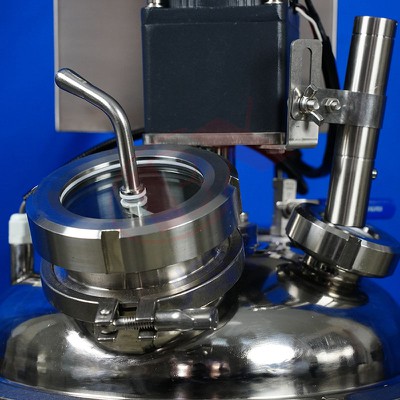
Higher-quality machines built from durable, corrosion-resistant materials such as stainless steel (SUS304 or SUS316) tend to offer longer service life and lower maintenance costs. Additionally, features like automated cleaning systems and energy-efficient drying mechanisms contribute to ongoing savings. When evaluating return on investment (ROI), factor in potential gains from reduced capsule waste, lower labor costs, and the ability to enter new product markets.
Vendor Support and After-Sales Service
The reliability of the equipment supplier is just as important as the machine itself. A reputable vendor should offer comprehensive support, including installation assistance, operator training, and access to technical documentation. Spare parts availability and responsive service networks are critical to minimizing unplanned downtime.
Before committing to an upgrade, request references or case studies from companies with similar production profiles. Understanding how the vendor handles troubleshooting, software updates, and compliance validation can provide valuable insight into the long-term partnership.
Future-Proofing Through Flexibility
Finally, consider how adaptable the new equipment will be to future industry trends. With growing interest in personalized nutrition, clean-label products, and novel delivery formats, encapsulation technology must evolve accordingly. Machines that allow for quick changeovers between capsule sizes, shell materials, or fill types offer a strategic advantage.
Seamless capsule technology, in particular, aligns well with these demands. By eliminating the need for gelatin ribbon preparation and complex sealing mechanisms, it simplifies the production process while enabling greater formulation creativity.
Conclusion: A Strategic Path Forward
Upgrading from traditional softgel equipment is not merely a replacement of machinery-it is an opportunity to rethink production capabilities and position the business for long-term growth. By carefully evaluating throughput needs, digital integration, formulation compatibility, facility layout, and total cost of ownership, manufacturers can make informed decisions that enhance both quality and competitiveness.
A well-planned transition to modern encapsulation technology ensures that production lines remain agile, efficient, and ready to meet the challenges of a dynamic market.